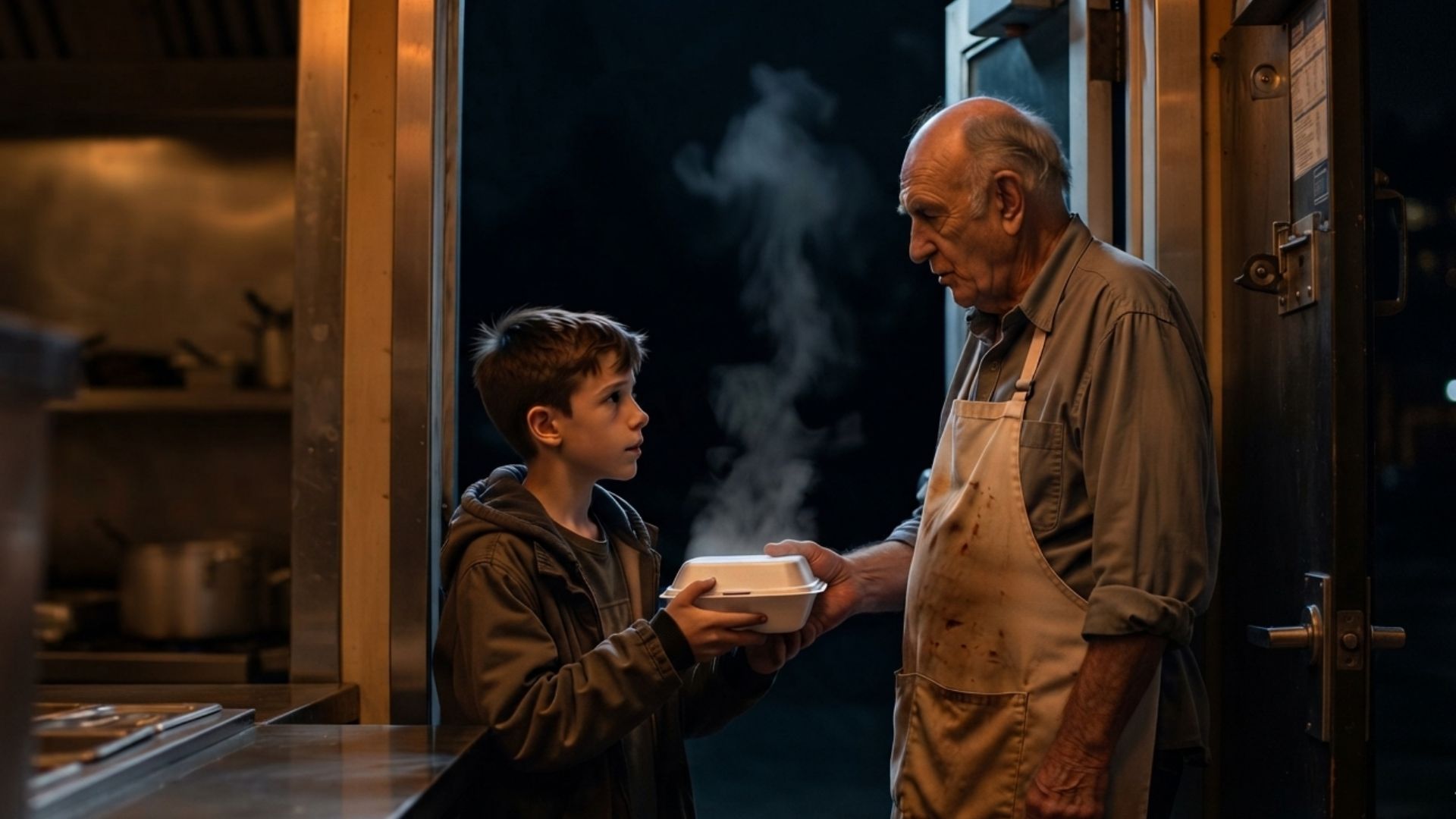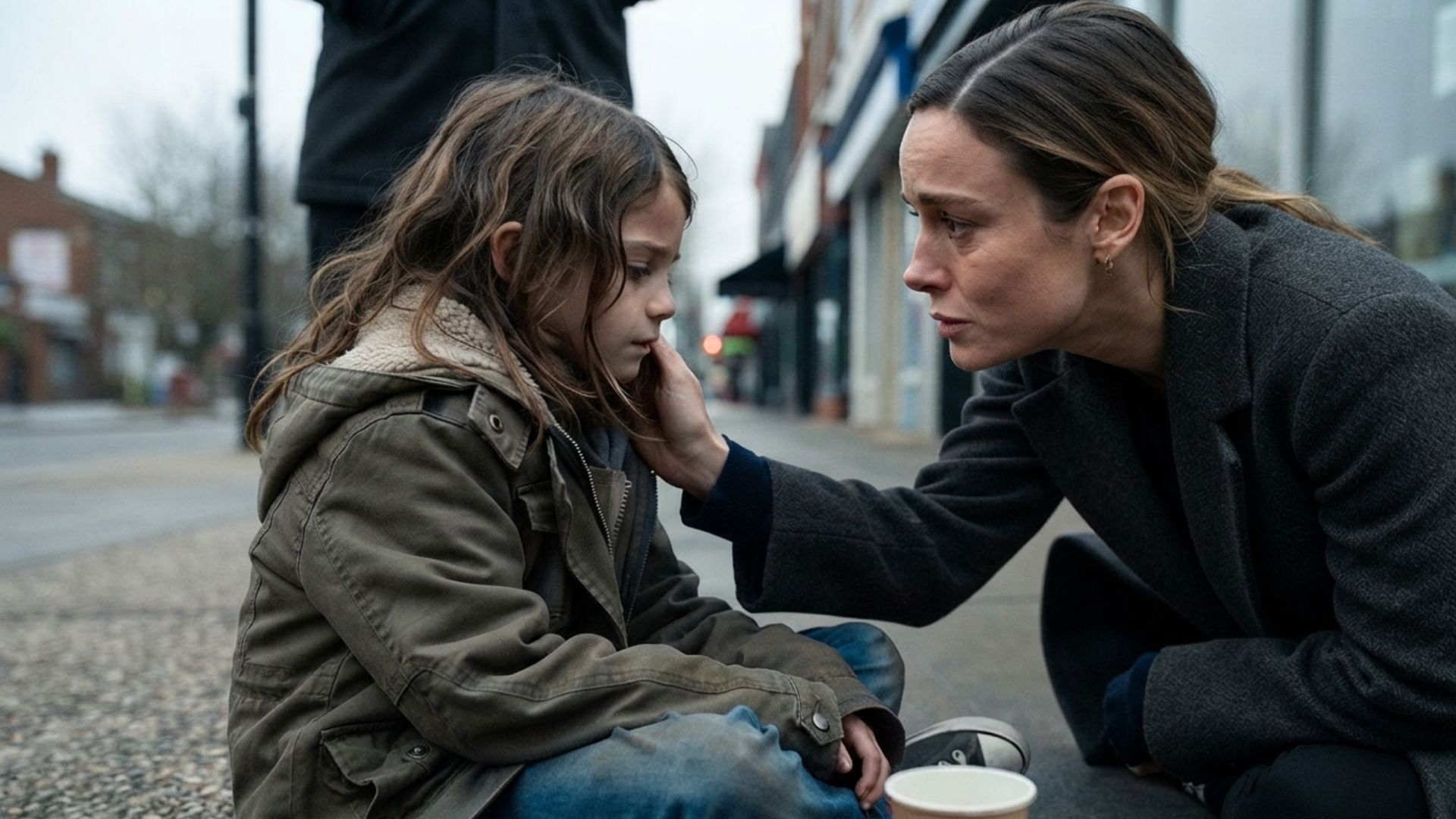
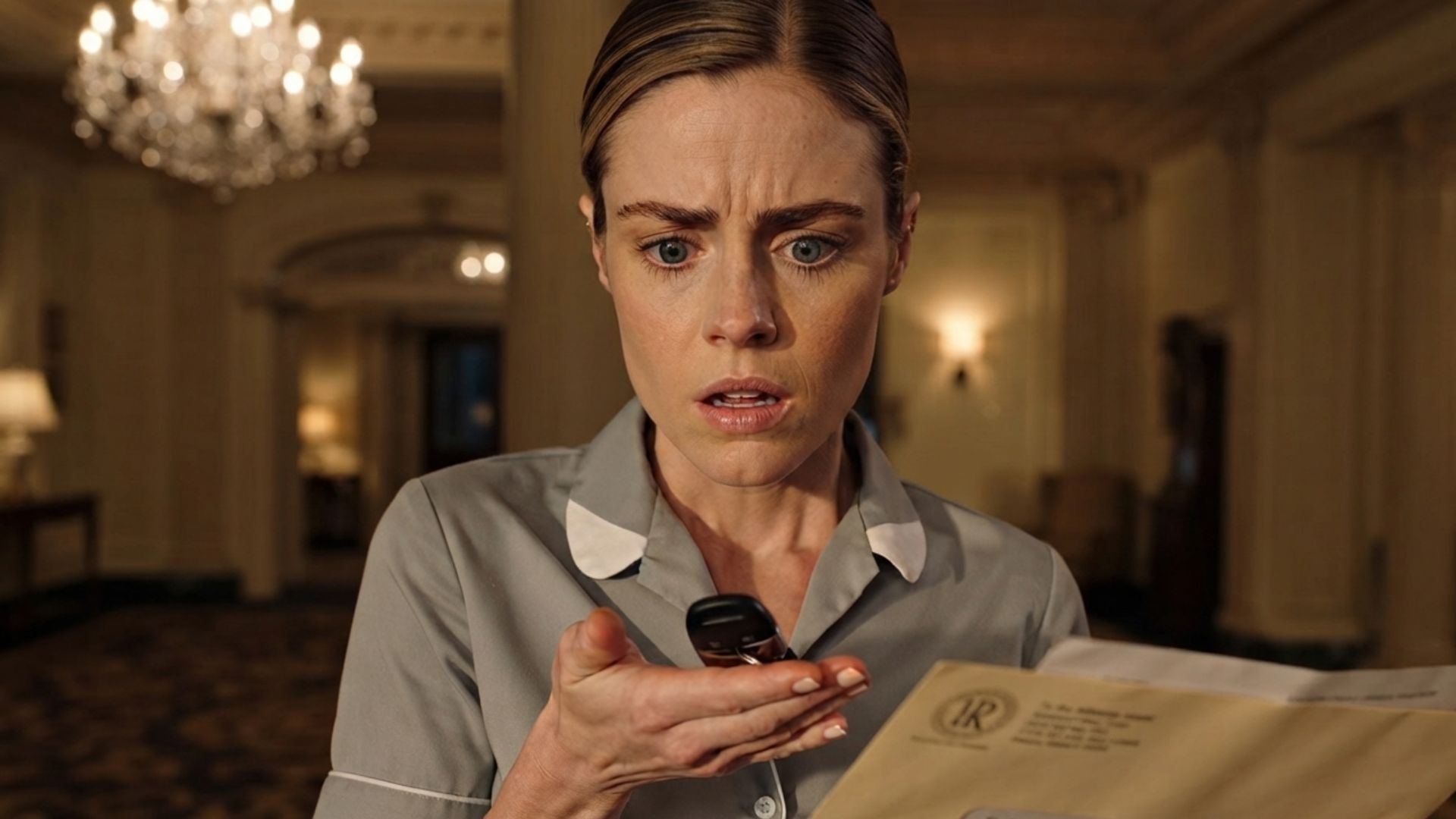
He sat at her table every week dressed like a homeless man — but the letter her driver delivered revealed he owned the hotel.
The first time Maya noticed him, he was sitting at table seven with a paper coffee cup and eyes that didn’t quite match his clothes.
Most guests at the Harlow Hotel ignored him. The maître d’ tried twice to remove him. But Maya always stopped them.
“He’s not bothering anyone,” she said. “Let him be.”
She set down a plate of scrambled eggs and wheat toast. He looked up.
“You don’t have to do that,” he said.
“I know.” She smiled. “But I want to.”
His name — or the name he gave — was Dan. He came in on Tuesday mornings and sometimes Thursday afternoons. He always took the same corner table. He never ordered anything. He always had that cup.
Maya started bringing him extras. A side of fruit. A second coffee. A slice of pie that “accidentally” didn’t make it to another table.
Her coworker Becca watched from behind the service counter with narrowed eyes.
“You know he’s not actually going to tip you, right?”
“Good thing I’m not doing it for a tip.”
Becca rolled her eyes. “You’re too nice for this place, Maya.”
“This place is fine.” Maya tucked her notepad into her apron. “He’s just hungry.”
Week three. Dan arrived early. He was already seated when Maya started her shift.
She noticed he was reading — a slim hardcover, not a paperback, not a phone. He held it like he was used to holding books.
She brought him coffee without being asked.
“You remembered,” he said.
“Two sugars, no cream.” She set it down. “Not hard to remember when you’re the only person who actually says thank you.”
He looked at her for a moment longer than usual.
“Can I ask you something?”
“Sure.”
“Why do you do this? For me, I mean. The extras. You don’t have to.”
Maya leaned against the back of the chair across from him. “Honestly? My mom used to say that kindness is the only thing you can give away and still keep. I think about that a lot.”
He was quiet.
“That’s a good thing to think about,” he said finally.
She left him to his book.
Week five. He didn’t show up Tuesday.
Maya found herself checking the door more than she should have. She told herself it was nothing. People moved on. Regulars disappeared all the time.
Thursday. Still nothing.
Becca noticed.
“Missing your pet project?”
“I’m just used to seeing him.”
“Maya.” Becca’s voice softened slightly. “You know you can’t save everyone, right?”
“I wasn’t trying to save him. I was just — being decent.”
She said it firmly. But the table felt empty that week.
The following Tuesday, a man in a black suit came through the front doors.
He wasn’t a guest. He didn’t go to the host stand. He walked directly to the service floor and asked for Maya by name.
She came out from behind the counter wiping her hands on a towel.
“Can I help you?”
“I have something for you.” He held out a cream-colored envelope. Her name was written on it in clean, careful handwriting.
She opened it slowly.
I love you. Take this as a gift for your kindness — for seeing a person when it was easier not to. — D.
There was a small card tucked behind the note. And a key.
A car key.
She looked up at the driver. “What is this?”
“Look outside,” he said.
Maya pushed through the glass doors into the bright morning.
A black car was parked at the curb — sleek, polished, the kind that didn’t belong in front of the service entrance.
And standing beside it, in a charcoal suit, was Dan.
Except — not Dan. Not the version of Dan she knew.
He was clean-shaven. His hair was cut. His posture was different — easy, confident, the kind that came from somewhere other than exhaustion.
He looked exactly like himself. Just more so.
She stared at him for a long moment.
“Dan.”
“My name’s actually Daniel Harlow.” He said it carefully, like he was bracing for something. “As in — the hotel.”
She looked at the building behind her. At the name engraved above the door. Back at him.
“The hotel,” she repeated.
“Yes.”
“You own it.”
“My family built it. I run it now.”
Maya stood very still. “So this whole time—”
“I was looking for something real.” He stepped closer, not rushing, giving her room to process. “Everyone I ever met knew who I was before they knew me. I wanted — just once — to find out what I was worth without the name.”
“That’s — ” She stopped. Started again. “You lied to me.”
“I let you think I was someone who needed help,” he said. “I’m sorry for that. Genuinely. You deserved honesty from the start.”
“Yeah.” Her voice was flat. “I did.”
He didn’t argue. He stood there and took it.
That mattered to her more than she wanted to admit.
“So what is this?” She held up the key. “What am I supposed to do with a car, Daniel?”
“Drive it. Sell it. Throw the key in the fountain — I don’t care.” His voice was steady but his jaw was tight. “I just needed you to know that what you did for me — what you do for everyone, probably, without even thinking about it — it changed something in me. And I wasn’t going to disappear without telling you.”
She looked down at the key in her palm.
“You came in every week for five weeks.”
“Six,” he said. “You missed one.”
“You counted.”
“I counted.”
Maya exhaled slowly. The morning was cold and the sidewalk was busy and she was standing in her work apron holding a car key that cost more than her rent, and none of it felt real.
“I need to think,” she said.
“Okay.”
“That’s it? Okay?”
“What else am I supposed to say?” He spread his hands. “You don’t owe me anything. I owe you. I just — wanted you to have the option.”
She studied him for a long moment. Looking for the performance. Looking for the angle.
There wasn’t one. There was just a man standing on a sidewalk looking like he’d said the only true thing he’d said in weeks and was genuinely unsure what came next.
She called in late that day.
They walked two blocks to a diner — not the Harlow, not anywhere fancy. A place with laminate menus and coffee that came in a carafe.
She asked him everything.
Why the homeless act. Why a hotel, specifically. What he actually did all day when he wasn’t sitting at her table pretending not to have a last name.
He answered every question. Even the uncomfortable ones. Especially those.
She asked: “Was any of it real? The conversations. The things you said.”
“All of it,” he said. “That’s the part I didn’t plan on.”
She looked at him across the table.
“What part?”
“You.” He said it simply. “Falling in love with you wasn’t the plan. The plan was to find someone genuine and see if it went anywhere. And then you brought me pie and told me about your mother’s philosophy of kindness and I completely lost track of the plan.”
Maya was quiet for a moment.
“My mom also said never trust a man who shows up in a suit after showing up in rags.”
He blinked.
She smiled.
“She also said that if he looks you in the eye when he apologizes, give him one chance.”
Three months later, Daniel Harlow sat at table seven.
This time, he was on the schedule — officially, as a silent observer learning floor operations, because Maya had told him point-blank that if he was going to be serious about her, he needed to understand what her job actually looked like.
He lasted two hours before a family at table four asked him for more napkins and he went and got them without thinking.
Maya watched from across the room.
Becca appeared at her shoulder.
“Is that—”
“Yes.”
“The owner of this hotel is getting someone napkins?”
“Apparently.”
Becca was quiet for a moment. “He’s getting better tips than you.”
Maya laughed — a real one, the kind that made the couple at table two look up and smile for no reason at all.
Six months after that, the Harlow Hotel quietly launched a staff development fund — full tuition coverage for any employee pursuing a degree, no application required.
The announcement went up in the break room on a Tuesday.
Maya read it twice. Then she went back to her tables.
That evening, Daniel met her outside after her shift.
“Did you see it?” he asked.
“I saw it.”
“Twenty-two people qualify. I checked.”
She looked at him. “You’re going to be insufferable about this, aren’t you.”
“Completely.” He held out his hand. “You ready?”
She took it.
The street was loud and lit and full of people who had no idea what had happened at table seven, and that was exactly how she liked it.
She didn’t need the world to know. She just needed it to be real.
It was.

Related Posts